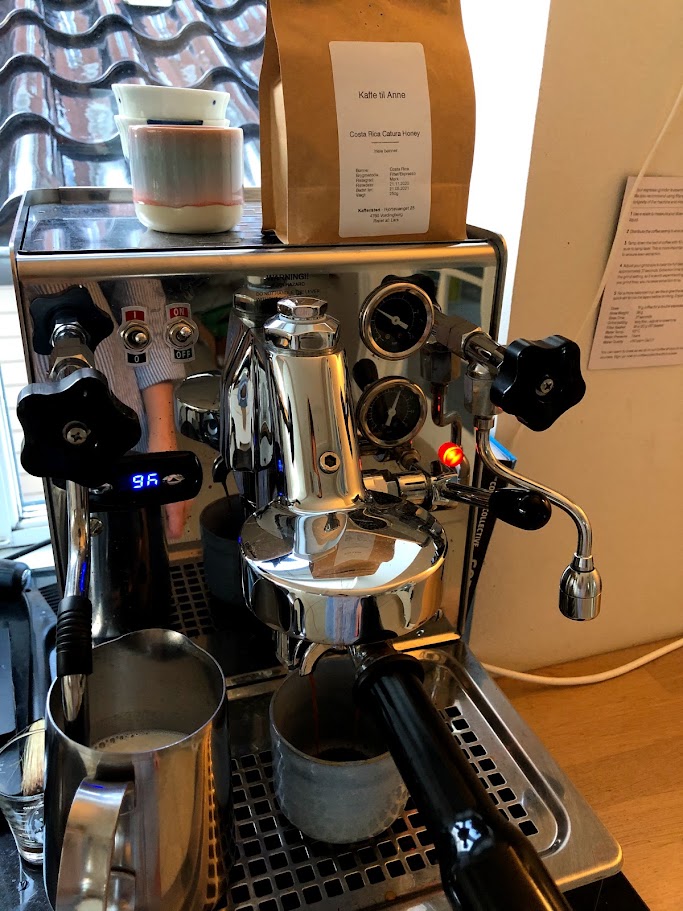
If your current machine can hold reasonable brew temperature and pressure, fix the grinder, recipe, puck prep, water and milk workflow before assuming the machine is the bottleneck. Upgrade the machine when you can describe exactly what limitation you are buying your way out of.
1. Start with the grinder
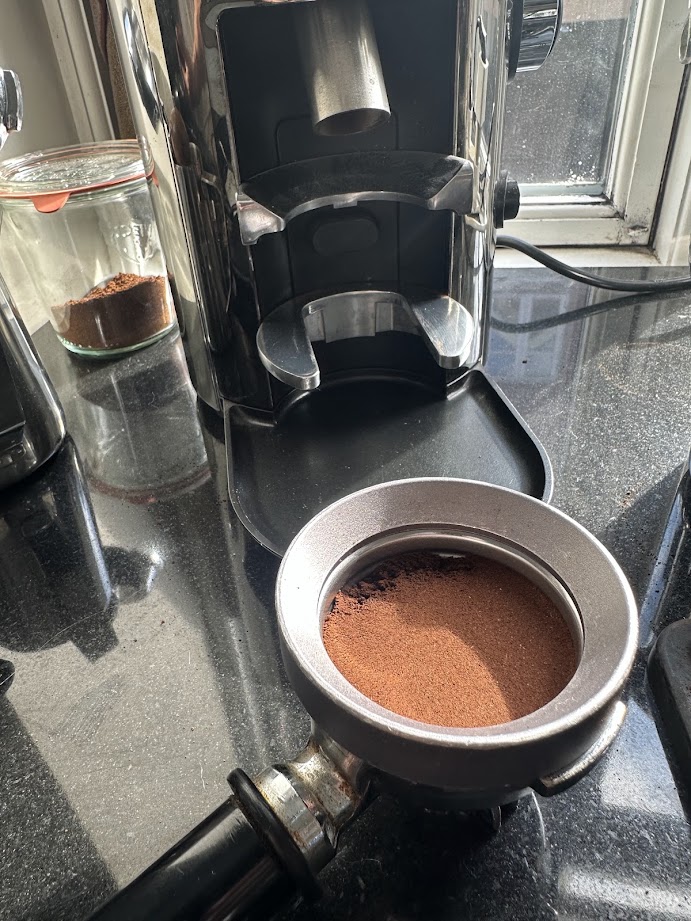
Espresso reacts to tiny changes in grind size. A grinder with poor adjustment range or inconsistent particle size can make dialing in frustrating even on an expensive machine. If shots jump from fast to choked with one adjustment, the grinder deserves attention first.
Read our complete coffee grinder guide before spending more on the machine.
2. Make the recipe measurable
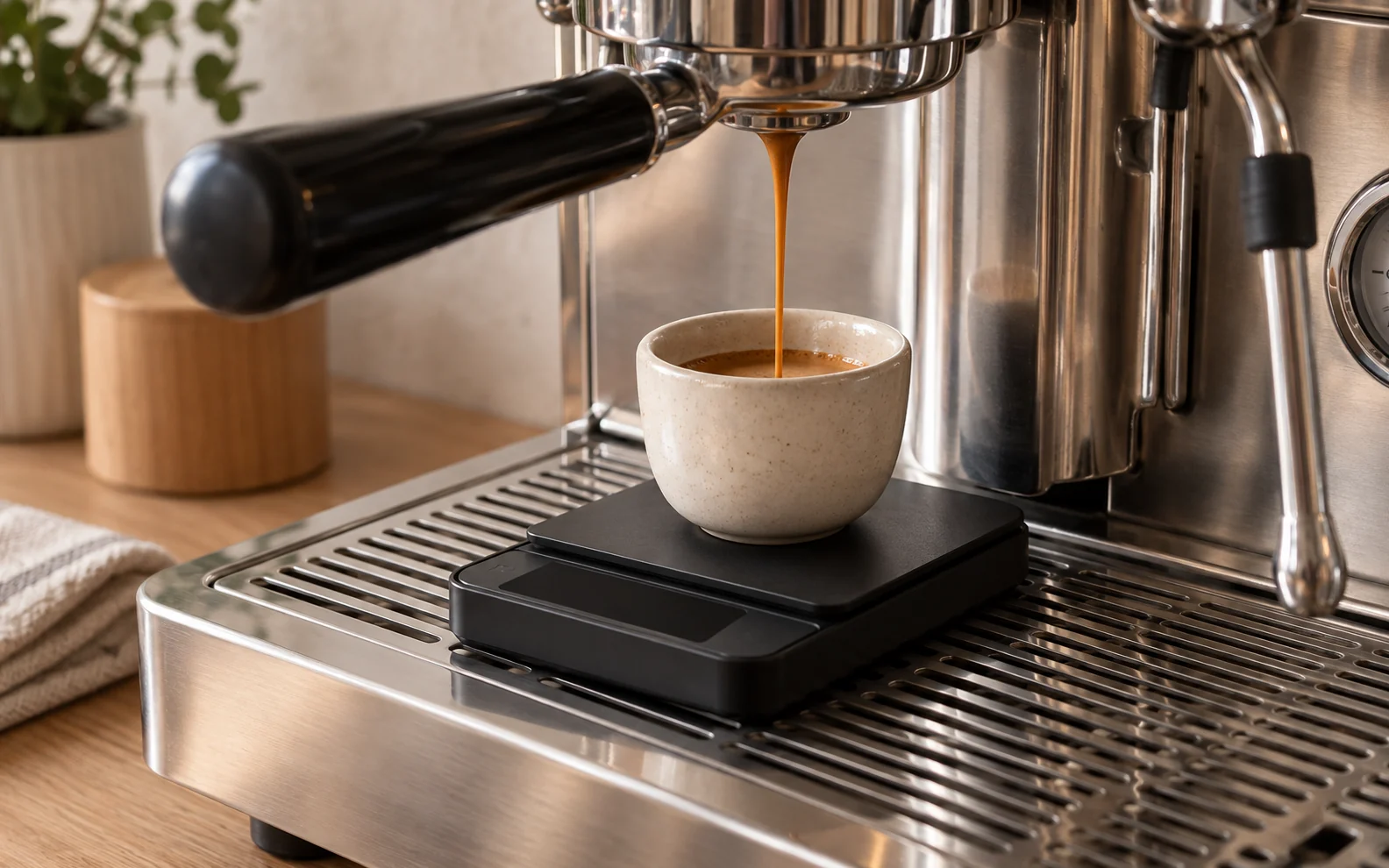
Stop judging a shot only by how long it runs. Weigh the dry dose and beverage yield, then use time as another signal. A simple starting point is roughly a 1:2 brew ratio, then adjust for the coffee and your taste.
If you cannot repeat the recipe, extra machine features will not create repeatability for you. See How to Dial In Espresso and our guide to espresso scales.
3. Remove puck-prep randomness
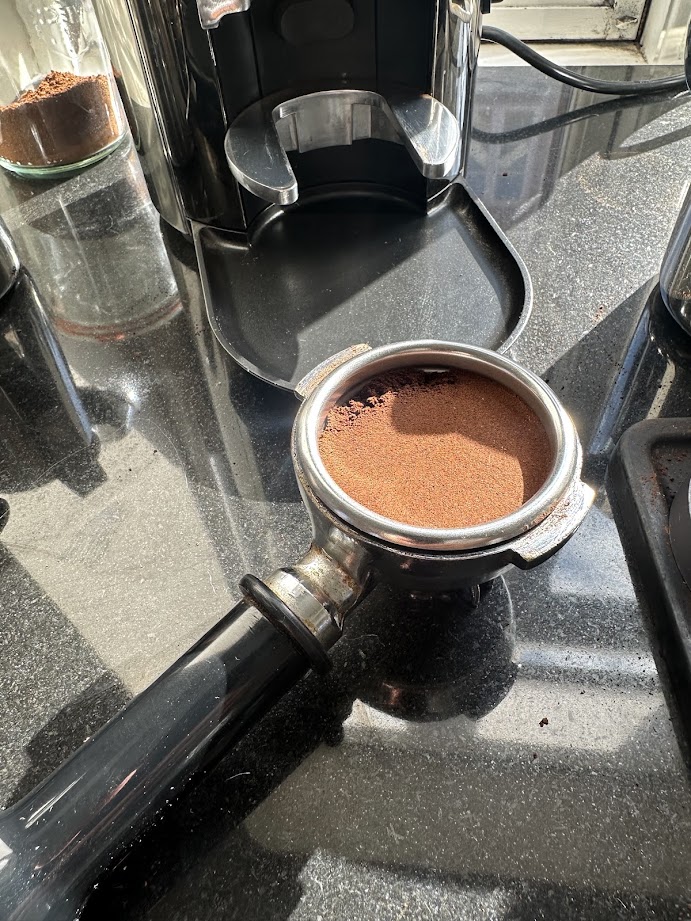
Uneven distribution, clumps and an angled tamp can create channels where water finds an easy path through the puck. Keep dose and basket consistent, distribute evenly and tamp level. Fancy tools are optional; a repeatable process is not.
4. Check the water
Water is most of the drink and it also lives inside the machine. Extremely hard water can create scale; unsuitable water can make coffee taste flat or harsh. Before buying a more expensive machine, understand the water you are feeding the one you already own and follow its manufacturer's water guidance.
5. For milk drinks, diagnose steaming separately
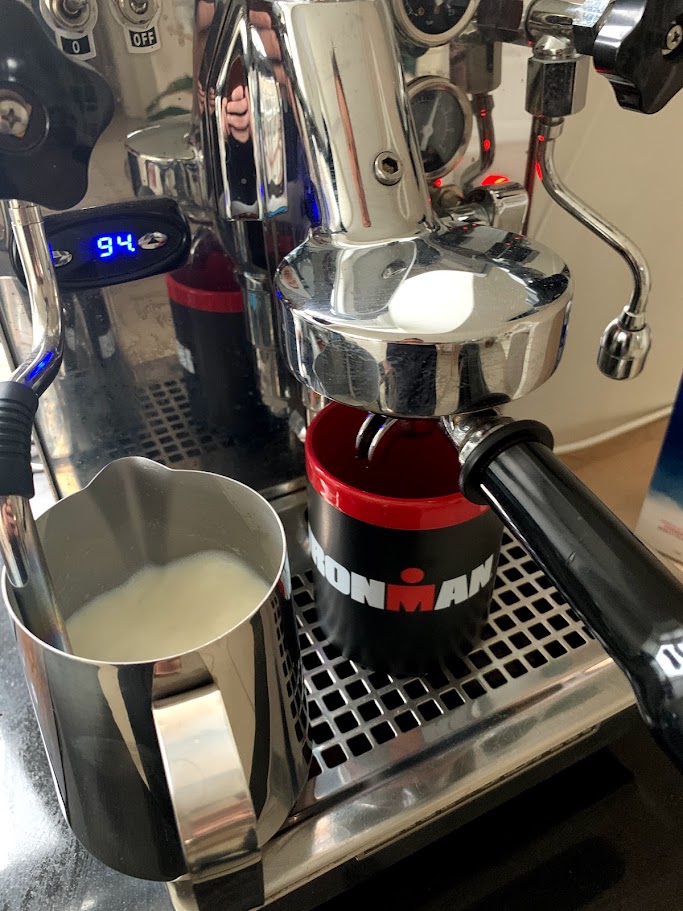
If espresso tastes good but cappuccinos disappoint, the machine may not be the first problem. Learn to add a small amount of air early, build a whirlpool and finish with glossy, fluid microfoam. Our milk texture guide isolates that skill.
When a new machine really does make sense
Upgrade when the limitation is specific: you need stronger steam, faster recovery for back-to-back drinks, better temperature control, simultaneous brewing and steaming, programmable profiling, or a workflow your current machine cannot provide. Then match the architecture to the job rather than buying the biggest spec sheet.
Single boiler, heat exchanger, dual boiler, thermoblock, lever or super-automatic? Start with the workflow you actually want.
Compare espresso machine types →Brew Uncut may use affiliate links on gear and shop pages. Recommendations are based on product fit and editorial judgment, not commission. If you buy through an affiliate link, Brew Uncut may earn a commission at no extra cost to you.