A Brasilia with an eagle
Nicolaj is bringing a copper-and-brass espresso machine back to life. The rating plate now confirms Brasilia and 1995. The exact model variant and completed repair work still need careful documentation.
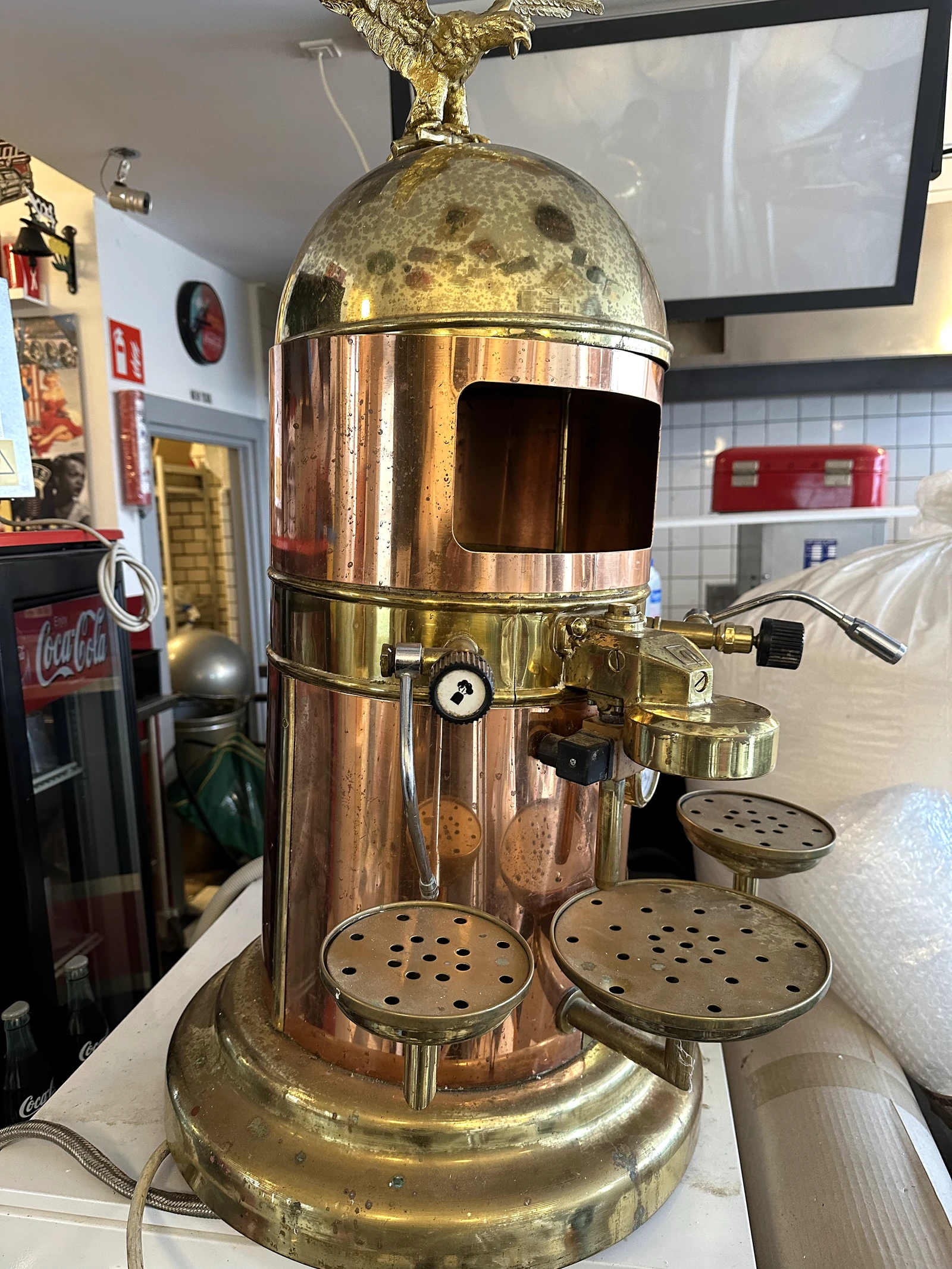
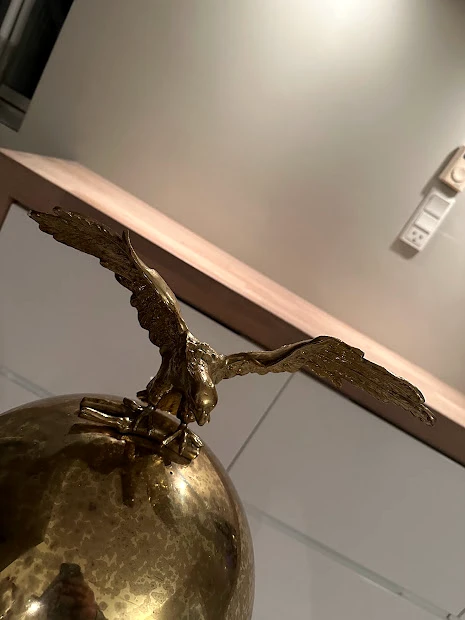
It is difficult to walk past this machine without stopping. The upright copper body, brass group housing and eagle above the dome belong to a very different era of café design. Nicolaj owns this example and is working on its restoration. The surface shows wear and oxidation in these photographs; they record its condition when photographed, not a claim that it is ready to pull a shot.
The newly photographed rating plate identifies Brasilia and gives 1995 as the year of manufacture. Its model line appears to begin “Belle Epoque”, but the compressed copy does not settle the complete variant suffix. The machine has one visible group. We keep the serial number private and do not infer service history or safe operation from the plate.
Brasilia's own story
Brasilia dates its founding to 1977 and describes its early business as professional espresso machines. It expanded into compact machines and international markets in the 1980s. The brand's own timeline records Bianchi Industry's purchase of the Brasilia brand in 2015. Those are facts about the manufacturer; Nicolaj's individual machine is dated by its own 1995 rating plate.
An original Brasilia instruction manual, marked revision 2 from October 2004, documents a Belle Epoque range. It describes vertical one- and two-group machines with copper-and-brass outer cases. The manual describes a boiler, heat exchanger, electric pump and automatic boiler filling for the range. The one-group format and materials make that manual an important lead for this restoration. The plate supports the Belle Epoque family, but this 2004 manual is a later revision than the 1995 machine. It is a comparison source, not proof of this example's exact variant, wiring or components.
And what about Elektra?
Elektra also sells a machine called Belle Epoque, with a vertical copper-and-brass form and an eagle. Elektra traces its company to Treviso in 1947; today's product page lists two- and three-group versions. The visual family resemblance explains why the names are easy to mix up. It does not establish that Elektra made this Brasilia, that the companies shared a production line, or that their parts interchange. We have not found a primary-source document demonstrating any of those relationships.
That distinction matters in a restoration. A similar-looking valve, badge or panel is not enough to order a replacement part or follow another maker's wiring diagram.
The grinder that will go with it
Nicolaj has chosen a copper- and brass-coloured grinder to use with the Brasilia and reports that the grinder already works. His reference photo shows a clear bean hopper, an adjustment collar and a side doser. No maker or model marking is readable, so we cannot yet identify the grinder or claim it was made as a matching set. The machine itself has not been cleared for use; the grinder's reported operation does not change that.
A sharper photograph of the grinder and its maker or model plate would let us tell its own story. For now, it is the intended partner in this project, not a verified period-correct pairing.
The next clue is on the machine
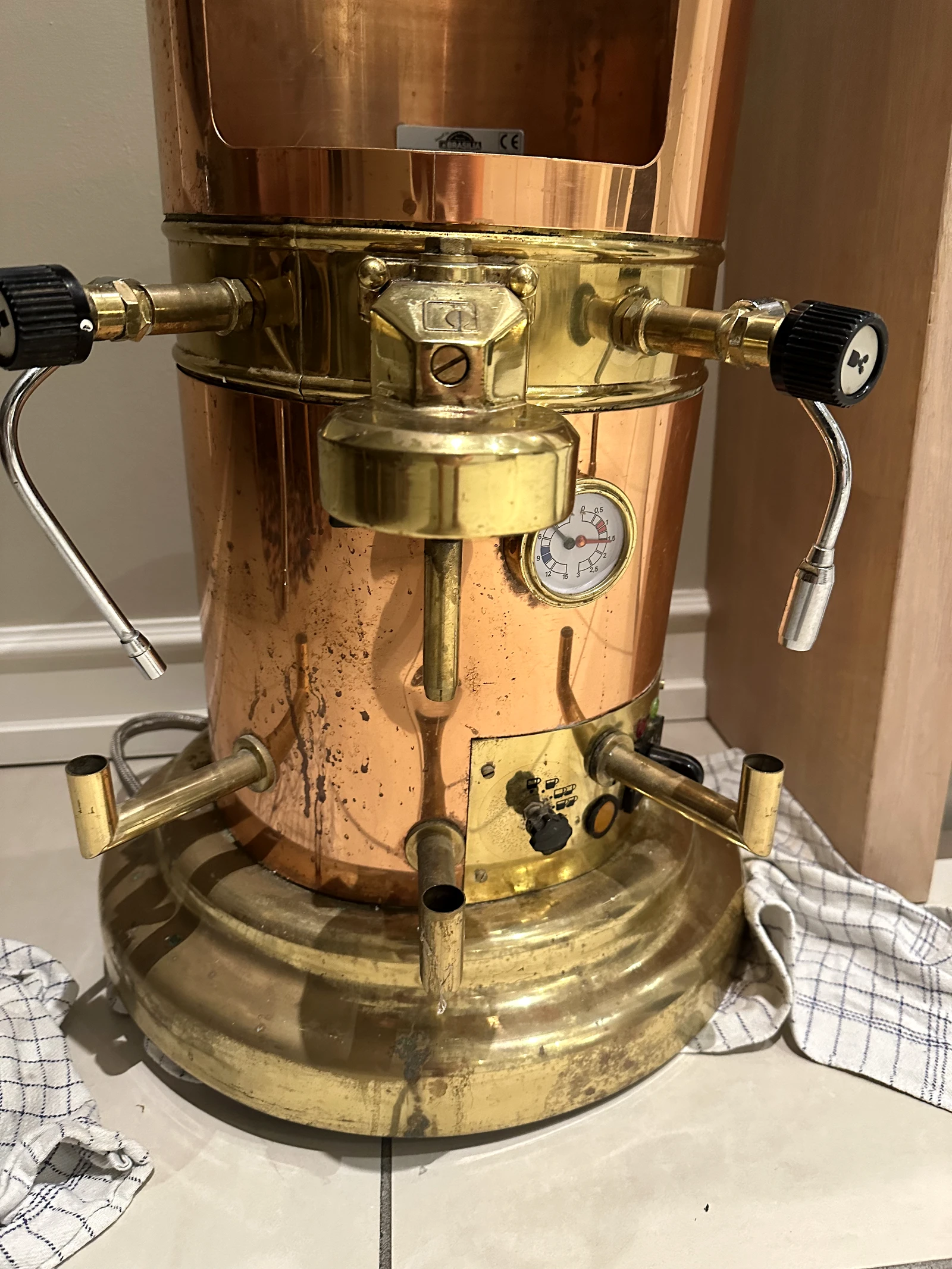
Further owner photographs now show the full eagle, open top and rating plate. The plate settles maker and year; the exact model suffix and internal condition remain open. Nicolaj reports that several parts have been repaired, but the parts and results have not yet been documented, so we cannot call the machine recommissioned. We will update this story when that work and the relevant checks are recorded.
The companion Geek log separates what the photos show from what still needs testing, and sets a safety boundary before any electrical or pressure-system work.
Read the restoration log →Sources and evidence
- Brasilia: company heritage and timeline
- Brasilia S.p.A., Belle Epoque instruction manual, revision 2 (2004), archived scan
- Elektra: company history
- Elektra: current Belle Epoque product information
- Nicolaj's original photographs IMG_9599.HEIC and IMG_9611.HEIC, uploaded to Brew Uncut media storage; source bytes preserved in the repository.
- Owner-supplied 2026-09-28 rating-plate and open-top photographs establish 1995 and the visible as-found state; the plate image and serial number remain private.
- Nicolaj's 28 September 2026 chat photo of the intended grinder and owner report that it works; its identity marking is still pending.