Start with the flavour you want and the way you brew. Buy freshly roasted coffee in a sensible quantity, use the roast date as context rather than a countdown clock, and change one variable at a time when dialing in.
1. Species and variety
Arabica dominates specialty coffee because of its broad flavour range. Canephora — commonly called robusta — generally brings more caffeine, body and bitterness and is also used deliberately in some espresso blends. Within species, varieties such as Bourbon, Typica, Caturra and Gesha can influence potential flavour, but farm, processing and roasting matter too. Treat variety as useful context, not a guarantee.
2. Origin: useful, not destiny
Country and region can hint at growing conditions and common flavour profiles, but “Ethiopian tastes fruity” or “Brazilian tastes chocolatey” are shortcuts, not rules. Altitude, variety, harvest, processing and roast can all move the cup dramatically. Use origin to explore patterns you personally enjoy.
3. Processing changes the expression
Washed coffees often emphasize clarity and acidity because fruit is removed before drying. Natural coffees dry inside the fruit and can show more intense fruit and fermentation character. Honey/pulped natural methods leave varying amounts of mucilage during drying and can sit between those broad tendencies. Modern anaerobic and controlled-fermentation processes can create especially pronounced flavours.
4. Roast level and your brew method
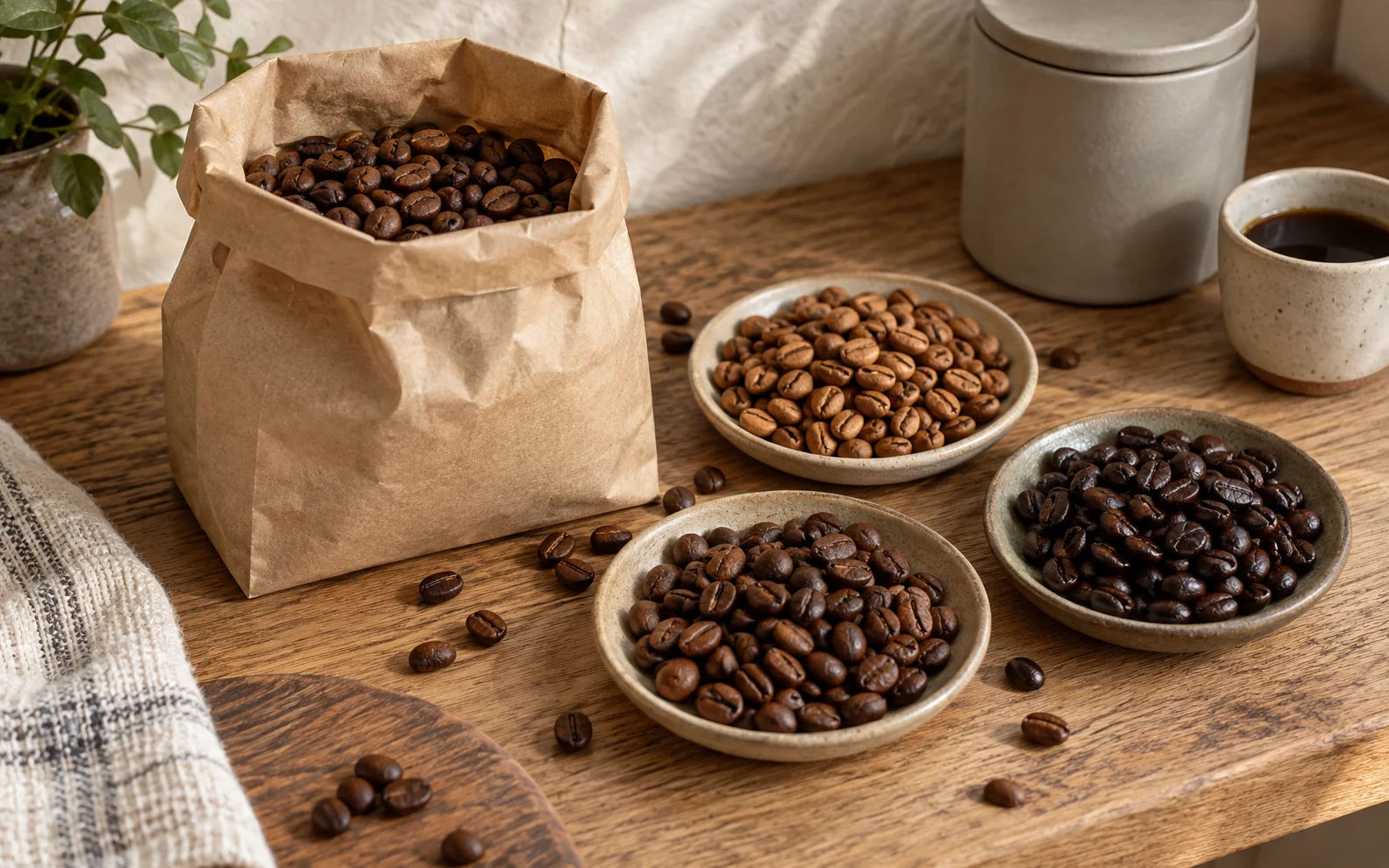
Light roasts usually preserve more origin character and can be harder to extract. Medium roasts often balance sweetness, acidity and ease of brewing. Darker roasts push toward roast-driven flavours and greater bitterness. Espresso does not require dark roast: modern espresso can work beautifully across a wide range, but lighter coffee may demand higher temperature, finer grinding or longer ratios.
5. Freshness without the mythology
Coffee changes after roasting as gases escape and aromas evolve. Extremely fresh coffee can be difficult to brew consistently, especially as espresso. Rather than chasing coffee hours after roasting, buy from a roaster that provides a roast date and learn how that coffee behaves over the following weeks. Grind immediately before brewing whenever practical.
6. Reading tasting notes
“Blueberry”, “caramel” or “jasmine” does not mean those ingredients were added. Tasting notes describe associations the roaster or taster found in the coffee. Use them as a direction of travel. If you repeatedly enjoy chocolate, nuts and caramel, shop around those descriptors; if you love floral, citrus and berry notes, follow those instead.
7. Choosing beans for espresso
For an easy starting point, look for coffee explicitly described as espresso-friendly or a medium roast with sweetness-forward notes. If you drink mostly milk drinks, coffees with chocolate, caramel, nut or ripe-fruit character often remain distinct through milk. For straight espresso, there is no required flavour profile — choose what you like and dial it in deliberately.
Need the mechanics? Continue with How to Dial In Espresso and our Coffee Grinder Guide.
8. Storage
Protect coffee from oxygen, heat, moisture and strong light. Keep the bag well sealed or use an airtight container in a cool cupboard. Avoid repeatedly opening a large frozen bag; for longer storage, portion coffee into genuinely airtight packs and freeze those portions separately. Let a sealed portion come to usable temperature before opening so condensation does not settle on the beans.
9. A simple buying checklist
- What do you brew most: espresso, milk drinks or filter?
- Which flavours do you already know you enjoy?
- Is there a roast date and clear roaster information?
- Will you finish the bag while it still tastes lively?
- Are the tasting notes and roast style compatible with your preference?
- Can you buy smaller quantities before committing to a subscription?
Some Brew Uncut links may be affiliate links. We may earn a commission at no extra cost to you. Recommendations are based on coffee quality, product fit and editorial judgment — never commission rate.
10. Build your own flavour map
Keep a simple note for each bag: origin, process, roast, recipe and whether you would buy it again. After ten bags, your own data is more useful than most generic “best coffee” lists.
Carousel: Species → origin → process → roast → freshness → buying checklist.
Reel: “5 things on a coffee bag that actually help you choose better beans.”
Stories: Washed vs natural poll; light vs dark roast poll; tasting-note quiz.
Short video: Compare two bags and explain the label in under 30 seconds.